

Uncovering the Veil
Facing the Dark Side of Advocacy

Let’s kick off this Substack journey by diving into the first layer of my identity: President and Founder of Umeed-Hope. We’re a nonprofit that’s all about fighting family violence in South Asian communities, both reactively and proactively.
When the idea first came up, I was moving from being a victim to a survivor, and then, honestly, I just felt blank. After being broken and beaten down, I realized this was the abusive path I was meant to be on, just like the women who came before me. So I finally said:
FUCK THAT.
I was searching for an organization that would let me speak out about the messed-up men in our community who give dirty looks but get caught cheating, or those who claim to be the most religious but spend their time judging and cursing others. No one seemed ready to give a young woman like me the chance to speak the raw truth. Not the sanitized version for those who haven’t faced real trauma, but the real, raw reality many of us go through. A reality that gets dismissed by those who’ve never had to watch their mothers be yelled at while still putting food on the table, or witness fathers being emotionally distant while processing grief. Many of us, including our parents and grandparents, get trapped in cycles of pain and isolation from a young age.
Nobody wanted to be the first to speak these truths aloud and wear the survivor label as a badge of honor instead of shame.
That’s where Umeed came from—a space where we can be ourselves, live our truths, and advocate for others who feel trapped in their own misery. At first, we thought the nonprofit world was this magical place where we could make a real impact, but then we faced the darkness and the power-hungry leeches.
The nonprofit world can be like being in an abusive relationship. They love to show you off and put in the work when the cameras are on, but as soon as no one’s watching, they’re quick to judge and silence you when you shed light on the real harm behind closed doors.
There’s a clear split in the nonprofit world: mutual aid versus money-making. One genuinely empowers individuals and communities, while the other is just about picking up grants, checking boxes, and taking pictures.
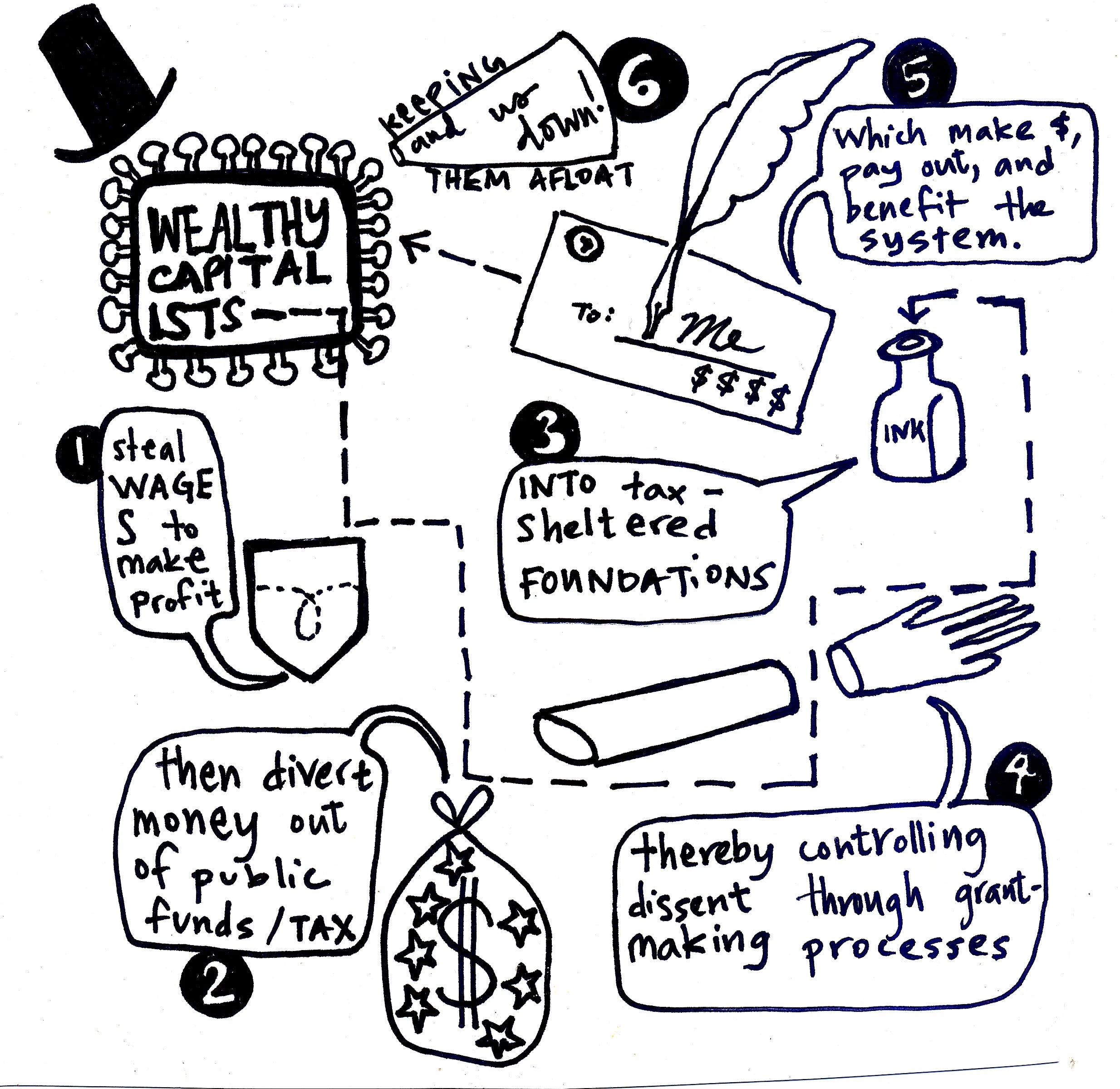
Let’s talk about the big suits.
These are the people who “represent” our communities in high-profile settings but are more focused on playing politics and maintaining our victim image instead of advocating for what we truly care about—our safety in the midst of these state-sanctioned assassinations, immigrant rights in regards to healthcare and education, fair wages, and religious protections in all settings. They’re more concerned with national politics than local issues, making us look ridiculous when they refuse to express solidarity with marginalized communities worldwide.
And then there are the community organizers who also love the spotlight.
How often do we see someone being platformed who talks about representation but can’t actually explain what it means in context? They might post for likes and clout but fail to address critical issues like Sikh sovereignty, gender-based violence, and arbitrary detentions. It’s particularly concerning when abusive men with a track record of being unsafe, who teeter on social and political issues depending on who is going to take a picture, are repeatedly put on a pedestal. These individuals are given a platform despite their history of harming others. We, as a community, have clear stances, and supporting those who back a government complicit in silencing us is not in alignment with our values. These organizations are opening doors for others to be victimized by such individuals. If I can list 40 things we need to address, then those being platformed should be able to do the same and provide real examples on the spot. That’s what true representation looks like.
In the past few years, we’ve seen communities stay silent on real issues, ignore amazing authors and researchers, and silence those who expose the power-hungry behavior of those in charge. The veil has lifted, and it’s clear that many claim to care about vulnerable populations and allyship but are more interested in their own reputations than actually making a difference.
If you’ve felt swallowed up and silenced by an organization, it might be time to turn a new page. It’s scary, but there’s a brighter side waiting for you.