

The Caretaker's Code
One key layer of my identity is being a caretaker, shaped by the early conditioning that women experience, influencing our relationships and responsibilities.

From an early age, women are conditioned into roles of caretaking, a pattern that profoundly impacts their identities and experiences throughout life. This conditioning begins within the family and evolves through various stages of life, perpetuating a cycle of subservience that can become suffocating.
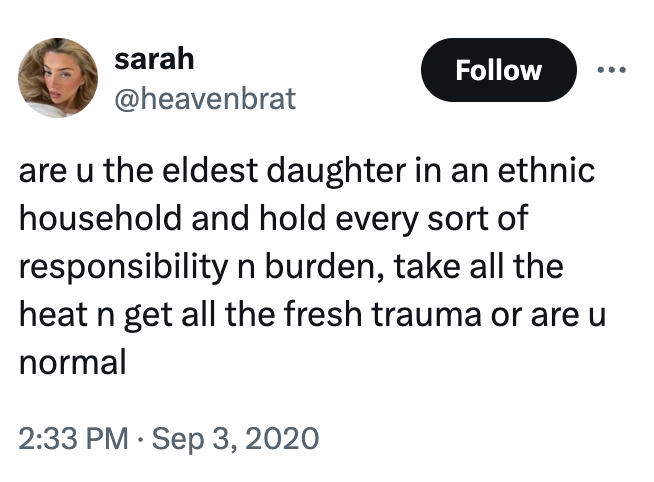
Daughter
As a daughter, I never felt I had a safe space to voice my concerns. The men in my family did not provide emotional support, which led me to combat being victimized by myself. This lack of validation from my family fostered maladaptive coping mechanisms, including lying and deceiving, as I sought acceptance in environments that would tolerate me. This experience highlights how early exposure to patriarchal norms shapes our behaviors and self-perceptions. Women are often pressured into domestic roles from a young age, reinforcing the notion that their primary responsibility is to serve others, which can undermine our sense of self-worth and agency.
Girlfriend
Transitioning into the role of a girlfriend, I continued to shed my own identity to ensure my partner's comfort, yet rarely received similar effort or consideration in return. I found myself perpetuating the same normalized abuse, including tolerating alcohol abuse and emotional and verbal mistreatment, under the belief that things would "get better" with time. This cycle of abuse is often normalized through societal and cultural expectations, which dictate that women should endure hardships for the sake of their relationships. Such patterns are reinforced by the expectation that women should continuously adapt and sacrifice, further entrenching them in cycles of self-neglect and dependency.
Wife
The transition into marriage brought additional pressures. I was expected to settle into this role without adequate time for self-reflection or healing. The societal narrative that women should immediately embrace their roles as wives, regardless of their readiness, perpetuates the cycle of self-sacrifice. This expectation reinforces the notion that women's personal needs and well-being are secondary to fulfilling these roles, preventing them from addressing their own emotional and psychological needs before taking on new responsibilities.
Loyalty to Uphold Systems
Even as I moved into roles that involved supporting others, such as working in gender-based violence spaces, I found myself caught in political dynamics and blame-shifting. These roles, while meant to be empowering, often involve navigating complex systems that perpetuate the same patterns of subservience and silence experienced earlier in life. The cycle of enabling and remaining silent reflects the same dynamics of self-neglect and subservience that began in my family and continued through my personal relationships.
The pervasive nature of these patterns underscores the need to confront and challenge the underlying patriarchal structures that enforce them.
Women’s experiences—from their roles as daughters and partners to their positions in advocacy—demonstrate the deep-seated norms that prioritize caretaking and self-sacrifice over personal agency. Recognizing and addressing these patterns requires both individual and systemic change, including advocating for personal empowerment, creating supportive spaces for healing, and challenging societal expectations that perpetuate these cycles. By sharing our stories and working towards reform, we can contribute to breaking these cycles and fostering environments where women can thrive and redefine their roles beyond traditional constraints.